

Non-swimmers can enjoy Oahu without entering the ocean. An Oahu island tour for non-swimmers can focus on land-based sights, with pickup and drop-off arrangements depending on the tour. Plan transportation alongside your itinerary so the day begins and ends smoothly.
It’s natural to want clear arrival instructions, especially when you’re traveling with swimmers or prefer to stay on dry land. You’ll learn what to expect from pickup, how seasonal conditions can shape tour timing, and what to prepare before departure. We’ll also cover useful arrival tips and accessible features to consider, including ways to enjoy an ocean outing from the boat rather than entering the water.
Key Takeaways
- Know what to clarify about hotel pickup and drop-off when planning a circle island or private land tour.
- Use seasonal conditions and departure timing to shape a more comfortable day on Oahu.
- Prepare clothing and essentials for a smooth arrival and changing island conditions.
- Consider access needs such as ladders, tender boats, and uneven ground when choosing how to experience the coast.
1. Are Hotel Pickup and Drop-Off Included With Most Tours?
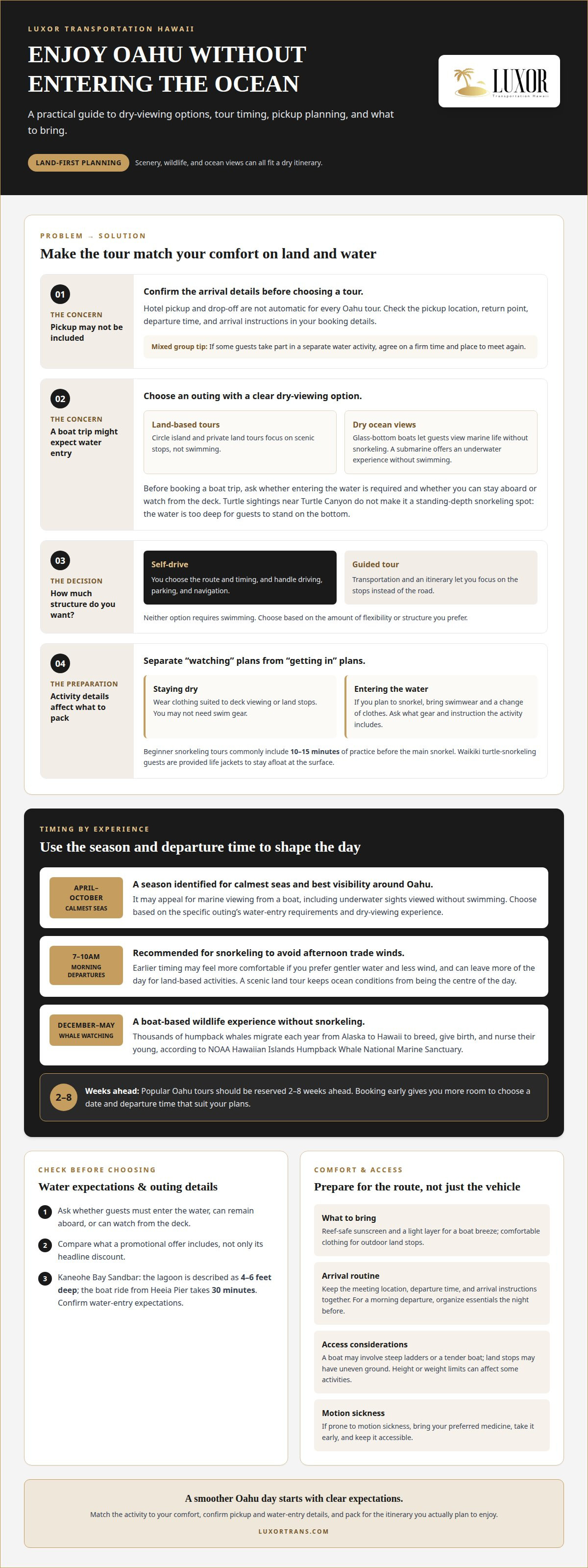
Hotel pickup and drop-off aren’t automatic for every Oahu tour. Circle island and private land tours can suit non-swimmers because they focus on scenic stops, not entering the water. Before booking, review the pickup location, return point, and arrival instructions. This helps you plan the day without making swimming part of the itinerary.
The best Oahu tours for non-swimmers include land-based circle island or private tours, as well as ocean outings with a dry viewing option. A glass-bottom boat lets guests view marine life without snorkeling, while a submarine offers an underwater experience without swimming. For a boat trip, check whether entering the water is required and whether staying aboard suits your plans. Turtles may be seen near Turtle Canyon, but the water there is too deep for guests to stand on the bottom while snorkeling.
With a self-drive Oahu tour, you choose the route and timing, but handle driving, parking, and navigation yourself. A guided tour combines an itinerary with transportation, letting you focus on the stops instead of the road. Neither option requires swimming, so choose based on how much flexibility or structure you prefer. For a mixed group, a land tour can keep non-swimmers together while others take part in a separate water activity. Agree on a firm time and place to meet again.
Promotional savings on underwater tours can make an outing more appealing, but compare what the offer includes, not only its headline discount. Beginner snorkeling tours commonly provide 10 to 15 minutes of practice before the main snorkel. Waikiki turtle-snorkeling guests are provided life jackets to stay afloat at the surface. Ask what gear and instruction are part of the specific activity, and whether you can remain near the boat or watch from its deck. Kaneohe Bay Sandbar tours offer another setting: the lagoon is described as 4 to 6 feet deep, and the boat ride from Heeia Pier takes 30 minutes. Confirm the outing’s water-entry expectations before choosing it.
2. Seasonal conditions and departure times
Season affects the kind of Oahu outing that may feel most comfortable. April through October is identified as the period with the calmest seas and best visibility around Oahu. That can make this season appealing for marine viewing from boat tours, including underwater sights viewed without swimming. A calm-looking forecast, lagoon, or harbor doesn’t establish that conditions are suitable for every activity, so choose an outing based on its water-entry requirements and dry-viewing experience.
For visitors considering snorkeling, morning departures between 7 and 10am are recommended to avoid afternoon trade winds. Earlier timing may feel more comfortable if you prefer gentler water and less wind. It can also leave more of the day for land-based activities around Waikiki or elsewhere on the island. If entering the water isn’t part of your plans, a scenic land tour avoids making ocean conditions the centre of your day.
Oahu’s whale-watching season runs from December to May. According to NOAA Hawaiian Islands Humpback Whale National Marine Sanctuary, thousands of humpback whales migrate each year from Alaska to Hawaii to breed, give birth, and nurse their young. Whale watching offers a marine experience from a boat without requiring snorkeling. Before booking, decide whether you prefer wildlife watching or coastal views, then choose a departure that fits your day.
Popular Oahu tours should be reserved 2–8 weeks ahead. For seasonal activities, booking early gives you more room to select a date and departure time that suit your plans. Keep the experience itself in view: boat tours differ in whether guests enter the water, remain aboard, or watch from the deck. A non-swimmer may find a land-based itinerary more suitable if the main goal is island scenery, while whale watching or a dry-viewing boat outing can add an ocean perspective. Match the season, departure, and activity style to the experience you want.
3. Clothing, sunscreen, and arrival tips
For an Oahu boat cruise, pack reef-safe sunscreen and a light layer for the breeze. Both are useful whether you stay aboard or join an ocean activity. For a land-based outing, choose comfortable clothing for outdoor stops. Dress for the itinerary rather than assuming every tour includes snorkeling.
Make a clear plan for water entry. If your booking includes snorkeling and you intend to enter the water, bring swimwear and a change of clothes. If you plan to stay dry, choose clothing suited to watching from the deck or viewing the coast from land. Possible sea turtle sightings, including around Turtle Canyon, don’t mean guests must enter the water. Review the activity plan so you pack for what you intend to do.
Prepare for arrival using the details in your booking confirmation. Keep the pickup or meeting location, departure time, and arrival instructions together. Set aside what you’ll carry before leaving your hotel, including sunscreen and a light layer. For a morning departure, organize these items the night before to avoid searching through your luggage at the last moment.
Motion sickness can affect comfort on a boat trip. If you’re prone to motion sickness, bring your preferred medicine and take it early. Keep it accessible rather than packed beneath clothing or other belongings. For a land tour, focus on the planned stops and wear comfortable clothing for getting in and out of the vehicle. For a cruise or snorkeling adventure, separate dry-viewing plans from water-entry plans. That distinction helps you pack for the experience you’ve chosen without bringing swim gear you won’t use.
Before setting out, follow a simple preparation routine: read the booking details, dress for the itinerary, pack reef-safe sunscreen, and keep a light layer within reach. These practical steps apply whether your Oahu day features coastal scenery, marine watching, or a land-based route.
4. Accessible tour features
Accessibility on an Oahu outing depends on the route and how guests board, move around, and take breaks. A boat tour may involve steep ladders or a tender boat, while a land stop may have uneven ground. Height or weight limits can also affect some activities. Consider each part of the experience, not just the vessel or vehicle. A viewing position on deck may suit one guest, while boarding steps make the same trip difficult for another.
Entering the water isn’t essential to every marine outing. Waikiki turtle-snorkeling guests are provided life jackets to keep them afloat at the surface. Guests can take breaks, stay near the boat, or watch from the deck instead of entering the water. These options let non-swimmers remain part of the outing, but don’t remove physical access barriers such as ladders or uneven boarding areas.
Use the itinerary to assess comfort before choosing an activity. Check where guests board, whether the route includes a tender boat, and how each stop is reached. A beach visit, for example, may involve walking across sand, while a harbor departure may require steps between the dock and boat. If your group has different mobility needs, prioritize a route with land-based viewing points and planned opportunities to rest.
Underwater activities also differ from surface viewing. A submarine or bottom boat may offer a dry way to see marine life, but the access experience still depends on boarding and the vessel’s layout. Don’t assume that a “certified” label explains the practical details guests need. Focus on the actual route, steps, seating, and viewing options. For an itinerary centered on land and scenic stops, plan a land-focused Oahu island tour around the access needs that matter to your group.
Luxor Transportation Hawaii: Island Tours
Luxor Transportation Hawaii offers Oahu Island Tours for visitors who want to explore without making swimming part of the day. If land-based sights suit your plans, an island tour offers a way to enjoy the scenery and shape your itinerary around places you can experience on shore. It can also work well for groups with different comfort levels around water, keeping the day focused on shared island experiences rather than requiring everyone to join an ocean activity.
As you plan, consider which sights matter most and how you want your day to unfold. Luxor Transportation Hawaii also offers Hourly Chauffeur Service for transportation built around time in a vehicle. To plan an Oahu outing focused on dry-land exploration, contact Luxor Transportation Hawaii.
Shape a Dry-Land Day That Feels Like Yours
An Oahu island tour for non-swimmers can be more than an alternative to getting in the water. Shape the day around the places and pace you’ll enjoy most. Choose the sights that interest you, then consider how transportation fits your arrival and travel between stops. A thoughtful itinerary gives your group a shared experience without making swimming the focus.
Luxor Transportation Hawaii offers Island Tours, Hourly Chauffeur Service, and Airport Transfer Service for different parts of your Oahu plans. Whether you’re arranging a land-based outing or coordinating transportation around your arrival, the next step is to share what matters for your day. You can contact Luxor Transportation Hawaii to discuss your plans and take the next step toward enjoying Oahu at your own pace.
Frequently Asked Questions
Are Hotel Pickup and Drop-Off Included With Most Tours?
Pickup and drop-off arrangements vary by tour, so review the transportation details before choosing an itinerary. For a circle island tour, note whether pickup is available at your accommodation or at a designated meeting point. Consider where the day ends, especially if you have dinner plans or another activity afterward. These details help you coordinate the tour with the rest of your schedule.
What Should I Wear and Bring for These Oahu Tours?
Choose clothing to suit the day’s stops and your plans for walking outdoors. Comfortable walking shoes are useful for land-based sightseeing, while a hat can provide shade at exposed viewpoints. Carry a small bag for personal essentials and keep your booking details easy to access. If you’re joining a boat outing but plan to stay dry, pack for time on deck rather than assuming you’ll need swimwear.
Which Oahu Tours Focus on Sightseeing and Do Not Require Swimming?
Land-based circle island and private tours focus on sightseeing without requiring swimming. For a non-swimming Oahu itinerary, consider stops such as Bishop Museum, a botanical garden, or a Waikiki dinner. A glass-bottom boat or submarine can offer an ocean perspective without snorkeling, but check that the specific outing’s dry-viewing experience matches your interests before booking.
What Are the Top Land-Based Attractions to Visit on an Oahu Circle Island Tour?
Pair cultural and outdoor stops, such as Bishop Museum and a botanical garden, for a varied land-based day. Pearl Harbor is another highlight on some circle island routes, alongside other island sights. A Waikiki dinner can provide a relaxed finish. The best combination depends on which experiences matter most and how much time you want at each stop.
Are There Oahu Tours With Accessible Transportation and Minimal Walking?
Some itineraries can be planned around scenic stops and less time on foot, but the amount of walking depends on the route and each stop’s layout. Consider the distance from the vehicle drop-off point to the viewing area, as well as surfaces such as sand or uneven ground. Boat outings may involve boarding steps or ladders, so land-based sightseeing may be a simpler fit for some mobility needs.
What Should Non-Swimmers Bring or Know Before Taking an Oahu Tour?
Decide in advance whether your day will be entirely land-based or include an ocean outing with a dry viewing option. That choice helps you pack appropriately and set expectations for your group. For mixed groups, agree on how swimmers and non-swimmers will spend the outing and where they’ll reconnect afterward. You can enjoy Oahu’s sights without making swimming a condition of the trip.


