

Is driving in busy resort areas stressful for tourists? A rental car can offer flexibility, but in an unfamiliar destination, one-way streets, heavy traffic, parking searches, and tight plans can turn a simple outing into a string of decisions. Before choosing how to get around, consider whether driving will give you more freedom or add another thing to manage during your vacation.
The answer depends on where you plan to go, how often you'll need a car, and how comfortable you are driving in busy, unfamiliar surroundings. Preparation can make the experience more manageable: plan routes before setting out, allow extra time, and check parking arrangements for each destination instead of treating parking as an afterthought.
This guide explains what makes resort-area driving demanding, how to prepare for the road, and how to decide whether a car's flexibility is worth the effort. If you'd rather focus on your plans than on directions and parking, a private chauffeur is another option. Luxor Transportation Hawaii offers point-to-point transfers and hourly chauffeur service, with professional chauffeurs and genuine island hospitality. By the end, you'll have a practical way to choose transportation that suits your trip.
Key Takeaways
- Is driving in waikiki stressful for tourists? It depends on your comfort behind the wheel, timing, route familiarity, and how much attention your plans require.
- Assess the full mental load of driving, including route changes, timing decisions, and finding a safe place to stop.
- Compare self-driving and chauffeured travel by the control, attention, parking effort, and itinerary flexibility each requires.
- Make driving more manageable by mapping your day, checking routes and parking, and leaving room for delays between stops.
- For direct journeys, point-to-point transfers offer a straightforward option. Hourly chauffeur service can suit itineraries that may change throughout the day.
Is driving in a busy resort area stressful for tourists?
Is driving in waikiki stressful for tourists? It can be, but there’s no single answer. Traffic, familiarity with the roads, timing, parking, and your comfort behind the wheel all shape the experience. A route that feels straightforward to one visitor may feel demanding to another, especially when the schedule is tight or several people are relying on you to make decisions.
Driving stress is the attention needed to navigate, make decisions, and manage vacation logistics at the same time. You may be following directions while watching for a turn, keeping track of passengers and luggage, and thinking about where to stop. Each task is manageable on its own. Together, they can make a short drive feel like work.
That doesn’t mean unfamiliar driving is automatically unsafe, or that every visitor will find it difficult. Stress describes how demanding the experience feels; safe driving means staying focused, following road signs, and making decisions without rushing. If you need time to check directions, pull over somewhere appropriate before doing so. For general background on Waikiki as a visitor destination, Wikipedia offers an overview of the area’s history and significance.
Why familiar driving habits can feel different on vacation
Routine helps drivers make familiar trips with less effort. On a new route, signs, lane choices, and turns call for closer attention. A passenger’s question, a bag shifting in the back, or a change of plans can add another distraction. Even a confident everyday driver may feel less relaxed when an unfamiliar route and vacation logistics compete for attention.
Which travelers may find self-driving easier or harder?
Visitors who enjoy navigating, have a flexible schedule, and plan only a few stops may feel comfortable driving themselves. Others may prefer a more predictable arrangement, especially if the day involves several destinations or mobility needs that make getting in and out of a vehicle more involved. Group size matters, too: coordinating passengers and belongings can add practical decisions, though traveling together may also make it easier to share navigation.
Your own comfort is the best guide. Ask yourself not only whether you can drive the route, but whether you want to spend attention on it during your trip. Consider the day’s timing, how many stops you’ve planned, and how much flexibility you want. A simple drive with room to adjust may feel manageable; a packed schedule with unfamiliar turns may feel less restful. Neither self-driving nor chauffeured transportation is right for every traveler. The useful question is whether driving supports the kind of day you want.
What makes tourist driving demanding: traffic, navigation, and parking
Traffic affects timing, navigation demands attention, and parking can complicate arrival. These are separate sources of trip friction, but they can build on one another. A slower journey may leave less time for an activity, while an unfamiliar turn or a search for parking adds more decisions along the way.
Traffic doesn’t have to be unusually heavy to affect a plan. Stop-and-go movement, a missed turn, or not knowing how long a route will take can make arrival times harder to predict. For broader context, the Hawaii Department of Transportation traffic data provides comparisons of traffic volumes on major state routes. Treat route timing as an estimate, not a promise, and leave room for changes.
Navigation adds its own demands. You may need to follow directions, notice lane choices, respond to a route change, and decide where it’s safe to pause. Trying to handle all of that while driving can pull attention away from the road. Reviewing the route before departure helps you anticipate turns and identify a suitable place to stop if plans change.
How route decisions and changing plans add pressure
A new restaurant, an extra stop, or a revised meeting time can change more than the destination. It may affect the route and the time you need. Set directions before moving, and, if you’re traveling with someone, let a passenger manage them. If you need to adjust the route yourself, stop somewhere safe and lawful first, then follow posted signs and applicable rules.
Why parking can affect the whole outing
Parking uncertainty can delay the start of an outing. If the first place you check is full, you may need extra time to find another suitable option, changing your arrival time or reducing time for the activity itself. Before setting out, review the destination’s parking information and note any instructions that apply. Build in a flexible buffer rather than assuming a space will be available immediately.
These pressures often come from small tasks accumulating, not from one dramatic obstacle. A route that looks simple on a map may still call for attention at each turn, while an uncertain arrival plan can make a tightly scheduled day feel rushed. Keep directions ready before you leave, agree on who will handle them, and make parking part of your plan.
If you’d rather leave the driving to a professional chauffeur, private transportation options can help you focus on your plans instead of navigating behind the wheel.
Self-driving or a chauffeur: which suits your vacation plans?
Choosing how to get around is less about finding one universally best option and more about deciding where you want your attention to go. Driving yourself gives you control over departure times and spontaneous stops, but you’ll also manage directions, parking, and the vehicle. A chauffeur lets you focus on the ride, while requiring you to plan around a booked journey or service arrangement.
If you’re asking, “is driving in waikiki stressful for tourists,” consider the day you have in mind. A relaxed outing with a few stops may feel very different from a tightly scheduled itinerary that involves frequent route decisions.
| Consideration | Driving yourself | Private chauffeur |
|---|---|---|
| Control | Choose when to leave and adjust stops independently. | Enjoy a planned ride without being the driver. |
| Attention | Manage navigation, traffic decisions, and parking. | Focus on passengers and plans during the journey. |
| Parking | Research options and allow time to find a suitable space. | Leave the driving to your chauffeur instead of searching for parking yourself. |
| Flexibility | Change plans on your own, while handling the revised route. | Point-to-point service suits a direct trip; hourly service can support a more adaptable itinerary. |
When a rental car can make sense
Driving may suit travelers who want an independent schedule, feel comfortable navigating unfamiliar roads, and expect to make several stops at their own pace. The choice works best when you’re also willing to research parking and account for the practical details of arranging and using a rental vehicle. Consider where you’ll go, how often you’ll drive, and whether managing the car fits the rhythm of your trip.
When a private chauffeur can reduce friction
A private chauffeur may suit visitors who would rather enjoy the ride than manage directions and parking. Point-to-point transfers are designed for a direct journey, while hourly chauffeur service can accommodate plans that may shift during the day. Luxor Transportation Hawaii provides service with professional chauffeurs and a fleet that includes executive sedans, Cadillac Escalade SUVs, and Mercedes Sprinter vans. It’s a comfort option, not a requirement for every traveler.
For a practical decision, picture a typical day from the first departure to the last stop. If independent timing matters most and the driving tasks feel manageable, self-driving may fit. If reducing behind-the-wheel responsibilities matters more, a chauffeur may better suit your plans. You can also choose transportation according to the day rather than making one choice for every outing. The right balance is the one that leaves you with enough time and attention to enjoy the trip.
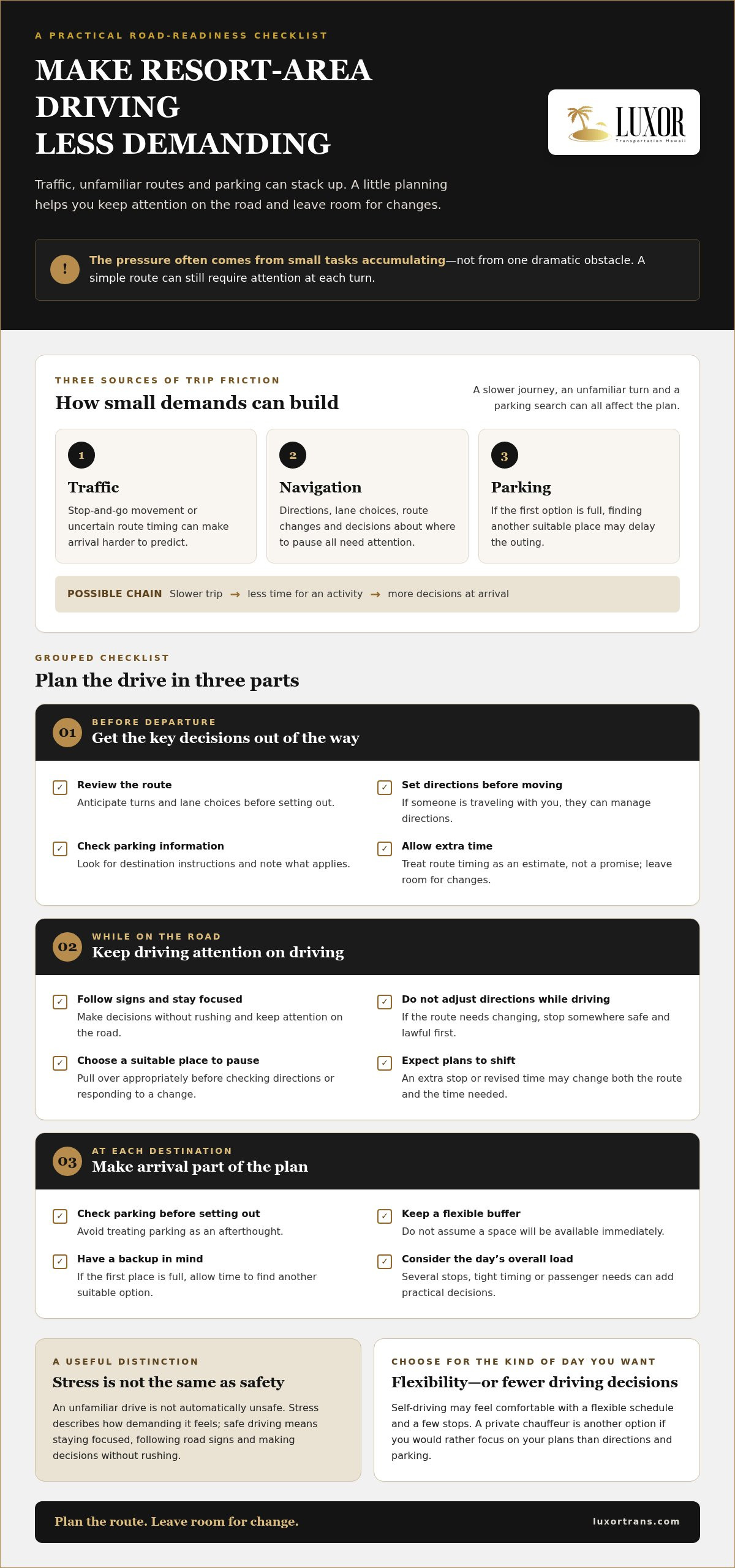
How to make tourist driving calmer with a simple plan
A little preparation can make driving feel more considered and less reactive. Before the day begins, decide which stops matter most, check how they fit together, and leave room for the unexpected. The aim isn’t to plan every minute. It’s to reduce the number of decisions you need to make while on the road.
Prepare routes and timing before setting out
Start by grouping nearby activities where practical. Review the full route, including the order of stops, before you leave. Check current directions and destination parking information, then allow a flexible buffer for slower travel, route choices, and arrival logistics. Prepare navigation access before departure, especially if you may have limited data access. Avoid filling the day with distant stops or appointments so close together that one delay affects everything that follows.
Reduce decision-making while on the road
Set your destination before moving, and don’t handle your phone while driving. If you’re traveling with a companion, ask them to monitor directions and share changes in advance. If the plan shifts and you need to adjust navigation, choose a safe place to pause first. If you feel rushed or unsettled, give yourself time to stop safely rather than trying to solve everything in motion.
Use this quick checklist before each driving day:
- Map the day: Choose priority stops and group them sensibly.
- Check the route: Review directions and prepare navigation before departure.
- Plan parking: Look up destination information and allow time for arrival.
- Leave breathing room: Keep gaps between plans and avoid an overpacked schedule.
- Share the task: Let a passenger manage directions, or pause safely before making changes.
This checklist can help answer the question, is driving in waikiki stressful for tourists? A clear route, realistic timing, and fewer decisions behind the wheel can make a drive feel more manageable. Still, a plan should serve your comfort, not turn the vacation into a sequence of deadlines. If the route or schedule begins to feel like too much, simplify the day or choose a different way to travel.
For visitors who’d rather spend the journey focused on their plans, a private chauffeur is another option. Luxor Transportation Hawaii offers private chauffeur service, including point-to-point transfers and hourly service for itineraries that call for flexibility.
A more relaxed alternative: private chauffeur and hourly service
Driving yourself isn’t the only way to keep a trip moving. A private chauffeur is an optional comfort choice for travelers who would rather enjoy the ride than manage directions and traffic decisions. It can be especially useful on a day when several people are coordinating plans or when you’d like the time between stops to feel like part of the outing, not another task.
The right arrangement depends on the shape of your plans. A direct journey has different needs from a day with several destinations and room for changes. Think about where you’re going, how many stops you expect, who’s traveling with you, and how much flexibility you want. That makes it easier to choose a service format that fits, rather than treating private transportation as a requirement for every visitor.
Match the service format to the shape of your day
Point-to-point service suits a defined journey between an origin and destination. It can simplify an airport transfer or another direct trip when you already know where you need to go. Hourly chauffeur service can better suit a day with multiple stops or a schedule that may change. You can shape the outing around your priorities while leaving the driving to a professional. Consider your itinerary, group needs, and desired flexibility before deciding which format makes sense.
For example, if you have one planned destination and expect to stay there, a direct transfer may be the more natural fit. If you’re arranging several activities and want flexibility between them, hourly service can support a more adaptable day. Neither option decides your plans for you. It simply changes how much of the journey you need to manage yourself.
What a chauffeur changes, and what it does not
With a professional chauffeur, passengers can leave navigation and driving to someone else instead of following directions from the driver’s seat. Luxor Transportation Hawaii provides private transportation with professional chauffeurs, including point-to-point transfers, hourly private charters, and island tours. Its fleet includes executive sedans, Cadillac Escalade SUVs, and Mercedes Sprinter vans, with vehicle categories for different travel needs.
You remain in charge of the experience. You choose the destinations, your timing preferences, and the priorities that matter to your group. A chauffeur doesn’t remove the need to plan what you want to see, but it can reduce the number of driving tasks competing for your attention. That distinction matters: some travelers enjoy the independence of driving, while others would rather settle in and focus on the day ahead.
If you’d like transportation that fits your itinerary, explore private chauffeur and transportation services. A thoughtful transportation choice can help the journey feel as considered as the plans at either end.
Choose the pace that lets you enjoy the journey
Your transportation choice can shape how the day feels, not just how you get from one stop to the next. Before you travel, picture a typical outing and decide what you’d rather spend your attention on: steering your own plans or enjoying the ride between them. If you’re still wondering, is driving in waikiki stressful for tourists, let your comfort with unfamiliar routes and the kind of day you’re planning guide your choice.
You don’t have to make the same choice for every part of your trip. Keep the flexibility of driving for outings where it feels comfortable, and consider a chauffeured ride when you’d prefer a calmer, more hands-off journey. A little intention now can leave more room to enjoy the experience later.
Explore private chauffeur and transportation services to find an option that suits the way you want to travel. However you choose to get around, may the journey feel relaxed and the time away feel entirely your own.
Frequently Asked Questions
Is driving in an unfamiliar resort area stressful for tourists?
It can be, especially if you’re tired after a long flight or haven’t had time to get oriented. Is driving in waikiki stressful for tourists? The answer varies with each traveler and trip. Before driving, consider whether you feel rested enough to focus and whether you’re comfortable handling an unfamiliar route. If not, choosing another transportation option at first can give you time to settle in before deciding whether to drive later.
Can tourists drive in the United States with an international license?
Requirements vary by state, so an international driving permit may not be enough on its own. Before travel, review the official motor vehicle guidance for the state where you’ll drive, along with the terms of your rental arrangement. Check what documents are required for your specific license and keep them accessible during the trip. Don’t assume that rules in one state apply throughout the country.
Can I use my phone for navigation while driving?
Use navigation hands-free, and set your route before the vehicle is moving. Phone laws differ across U.S. states, so review the rules that apply to your destination. For the location discussed in this guide, handheld mobile phone use while driving is illegal unless you’re using a hands-free device. If directions need attention, ask a passenger to adjust them or stop somewhere safe before handling your phone.
Is parking difficult for visitors in busy vacation areas?
It can be, particularly if you arrive without knowing what parking arrangements your destination has. Before leaving, look for current information about parking location, hours, payment methods, and any instructions for visitors. If you’re staying overnight, check whether your lodging has parking arrangements and how they work. Keep a backup plan in mind, and avoid relying on a single space or facility being available when you arrive.
What happens if I feel too stressed to continue driving?
Don’t try to push through while your attention feels affected. Signal and move to a safe, lawful place to stop, then take time to settle before deciding what to do next. If you’re with someone who can drive and is comfortable doing so, you can switch after stopping safely. If continuing doesn’t feel right, consider arranging another way to reach your destination rather than restarting before you’re ready.
How can I decide whether to rent a car or book a chauffeur?
Choose based on what the day asks of you. A car may suit an outing where independent timing matters and you’re comfortable managing the drive and parking. A chauffeur can be a better fit when you’d rather not handle those tasks, whether for a direct journey or a day with several stops. You can also decide trip by trip, instead of committing to one approach for your entire stay.


